
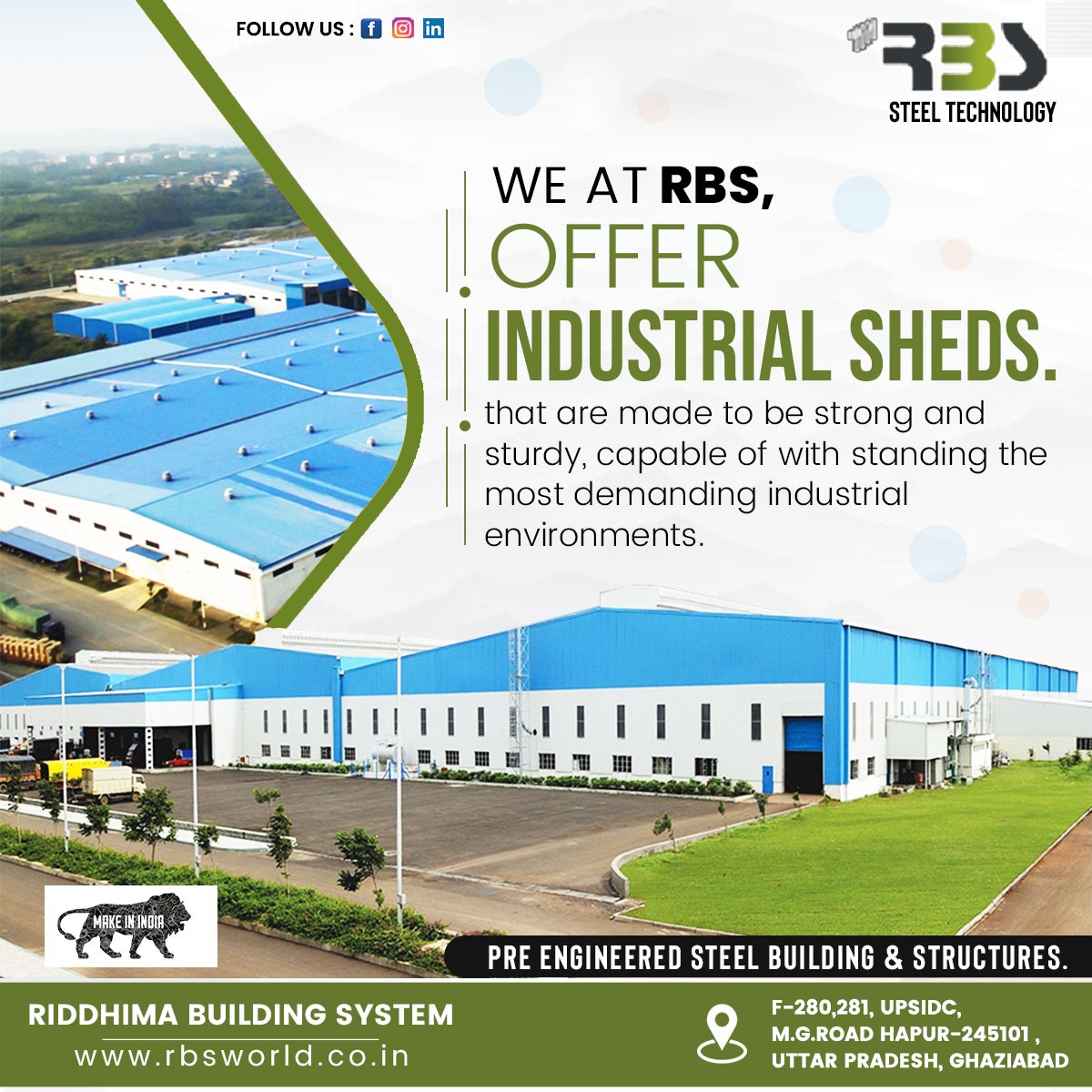
The growth of India is not just limited to large corporations or metropolitan cities. Every business, right from MSMEs to large manufacturing plants, factories and warehouses across the country are looking for a faster solution. However, one big challenge that they face is constructing factory infrastructure faster, cost-effectively, and efficiently.
This is where the importance of prefabricated sheds comes in handy. Almost every Prefabricated Factory Shed Manufacturer in India is moving beyond basic steel structures. The company, like RBS World, is focusing on scalable, smarter and future-ready designs in 2026. Here are the top trends shaping prefabricated factory shed design in India this year and what manufacturers and buyers should prepare for.
Top Trends in Prefabricated Factory Shed Design in India (2026)
- Hybrid Prefabricated + PEB Structures
The integration of prefabricated construction with pre-engineered building (PEB) systems is one of the biggest trends. Manufacturers are not just using a single construction approach; they are combining both to offer better performance. Hybrid designs offer:
- Higher load-bearing capacity for heavy machinery
- Longer clear spans with fewer internal columns
- Optimised steel usage, reducing material waste
- Better design flexibility without increasing timelines
Experts are recommending hybrid PEB-prefab structures for medium to large industrial units.
2. Modular & Expandable Factory Shed Design
Businesses are not of the same size for long. They grow and expand. So, modular expansion has become a priority in factory shed design. In 2026, experts are planning factory shedswith:
- Provision for future width expansion or lengthwise expansion
- Bolt-connected structures instead of permanent welding
- Reduced disruption to ongoing operations during expansion
The trend of modular and expendable sheds is beneficial for MSMEs and growing manufacturers who want to scale without relocating their facility.
3. Sustainable & Energy-Efficient Shed Solutions
Sustainability is now mandatory, we can say. Professionals are now expecting energy efficiency and long-term operational savings from Prefabricated Factory Shed Manufacturer in India. So, the RBS world includes sustainable design elements:
- Solar-ready roof designs
- Recyclable steel structures
- Natural lighting through wall panels and skylights
- Reduced material wastage through precision fabrication
Energy-efficient sheds lower electricity bills and improve working conditions inside the factory.
4. Modern Roofing and Climate-Responsive Design
Indian climate differs widely, from heavy monsoons to extreme heat. To address this challenge, the demand for prefabricated factory shed roofing systems is becoming more advanced in 2026. Modern roofing trends include:
- Improved thermal insulation for temperature control
- Heat-reflective and colour-coated roofing sheets
- Better ventilation planning for airflow
- Enhanced rainwater drainage systems
5. Faster Installation with Maximum Off-Site Fabrication
Speed is one of the greatest perks of Prefabricated Factory Shed construction. In 2026, manufacturers are focusing on doing more work at the manufacturing unit and less on the construction site. The approach at RBS World offers:
- Minimal on-site labour dependency
- Shorter project timelines
- Better quality control during fabrication
- Reduced chances of delays due to weather or manpower issues
Credible PEB Companies ensure that most components arrive ready for assembly, significantly reducing installation time.
Closing Insights
Experts say that the PEB shed design in a factory in India is entering a new phase. In 2026, the focus will no longer be just about fast construction, but also about scalable design, smart planning, energy efficiency, safety, and future readiness. Business owners who stick to these trends will benefit from faster operations, lower costs, and better flexibility as markets evolve. They should partner with an experienced Prefabricated Factory Shed Manufacturer In India. RBS World is the name that ensures your factory shed is built not only for today’s requirements but also for tomorrow’s expansion.